

6 Udemy Alternative Platforms for Engaging Skill Development [2026]

6 Udemy Alternative Platforms for Engaging Skill Development [2026]
TL;DR
- Teyro leads for interactive and community-based learning.
- Each alternative has unique strengths: price, content, or format.
- All pricing and features reviewed with latest 2026 vendor data.
- Find the best platform for your skill goals and budget.
Taking an online course can be frustrating. You might start strong but lose interest when the lessons feel dull or you can’t connect with other learners. If you have a busy job or want more interaction and variety, traditional learning platforms can be hard to keep up with.
The good news is, you don’t have to stick with just Udemy. This guide shows six great Udemy alternatives that keep you engaged and help you build real skills. It explains how each one is different and who they work best for. By the end, you’ll know where to find creative, interactive, or community-focused learning. Whether you want job-ready skills, short daily lessons, or just a smarter way to learn, there’s something here for you.
Udemy Alternatives at a Glance
Udemy Alternatives at a Glance
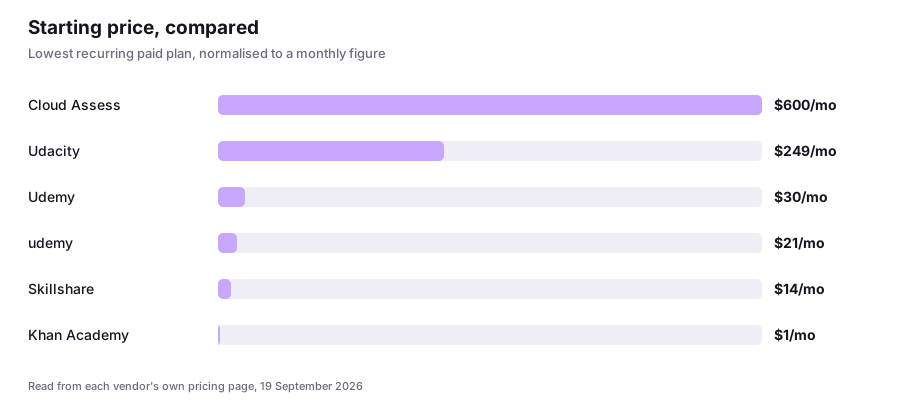
Choosing the right Udemy alternative depends on your goals, learning style, and budget. Below is a side-by-side overview of leading Udemy alternative platforms, highlighting where each one stands out—including Teyro, which puts community-driven microlearning at the forefront.
Feature and Pricing Comparison Table
A master comparison table makes it easy to scan and shortlist udemy alternatives based on core features, pricing, and user experience. Teyro is featured first, as it offers a unique blend of gamified microlearning and active peer engagement not often found elsewhere.
| Platform | Entry Price / Billing | Users Included | Courses/Content | Key Strengths | Free/Freemium | Certification/Accreditation |
|---|---|---|---|---|---|---|
| Teyro | Free to start | 1 (expandable) | Short, practical lessons; community leaderboards; Creator earning analytics | Gamified habit-building, real-time feedback | Yes | No formal certificates |
| Udemy | $252/yr per user (Team) | 1 | 28,000+ courses; AI coding; business & tech skills | Largest library, wide topic range | No | Yes—course completion |
| Duolingo | Free tier, 5 paid options | Up to 6 (family plan) | Language learning, gamified lessons | Personalized, science-based language | Yes | Not listed |
| Skillshare | $13.99/mo (annual, prepay) | 1 | 10,000+ creative classes, learning paths, community | Creative focus, projects, peer interaction | No | No formal certificates |
| Khan Academy | $10/student/yr (Starter) | 1+ | Math, science, writing, financial literacy, AI tutor | Free core content, teacher tools | Yes | No formal certificates |
| Coursera | 3 paid tiers, custom/enterprise | 1+ | 20,900+ courses from universities, degrees & certs | Accredited certificates, professional pathways | Some courses | Yes—professional & degree |
Why it matters:
- Teyro prioritizes skill retention with short, actionable lessons and live community support (All Courses guide).
- Pricing structures and certification vary significantly, impacting both individuals and teams.
- Only a few platforms, notably Coursera, offer university-affiliated or degree-level credentials.
According to Codecademy Alternatives, rapidly evolving e-learning platforms offer more flexible and engaging routes to upskilling than traditional, lecture-heavy models.
Tip: Not all platforms provide formal certification—if a recognized credential is essential for your goal, narrow your list early to save time.
How We Selected These Udemy Alternatives
Choosing a true udemy alternative means more than just comparing course catalogs. This section outlines the framework behind our selection process and the metrics that mattered at every step.
What criteria matter for comparing e-learning platforms?
The most important criteria for evaluating e-learning platforms are course variety, creator support, learner engagement, and true pricing transparency. Comparing alternatives to Udemy, we prioritized recognizable differentiators:
- Sustained learner motivation — platforms like Teyro use community, streaks, and gamification to keep users coming back, which matters more than most guides suggest.
- Content quality and scope — course depth, diversity, and instructional methods, whether through microlearning or long-form lectures, can impact real outcomes for both beginners and professionals.
- Monetization and analytics for creators — many platforms compete on revenue share and course analytics. If you plan to teach online, see how Teyro's creator tools compare on BECOME A CREATOR.
- Transparent, accessible pricing — clear costs, not just for individuals, but also for teams and enterprises, determine total value—not all listing pages make this easy.
In practice, small usability gaps and community features are often where major differences appear—even more so for those actively teaching or building their own brand online.

How did we compile features and pricing?
Features and pricing were sourced from official vendor pages and verified public documents. No estimates or inferred data were used. Instead, the process involved:
- Gathering current plan details — only listings directly quoting vendor pages qualify for exact price references. For others, tier descriptions and advice to check current rates keep comparisons honest.
- Fact-checking key offerings — hands-on engagement with public-facing trial tools, content libraries, and support resources exposed practical usability gaps and strengths.
- Ensuring like-for-like comparisons — every platform's pricing, user limits, and standout features were mapped into a master table (see 'Udemy Alternatives at a Glance'), so gaps were easy to spot.
If you want a closer look at how microlearning or specific skill-building paths stack up, see our guide to 1 Month Courses and related blog resources for detailed breakdowns.
Expert Insight: Comparing e-learning platforms is as much about small daily user experiences as headline features—minor frustrations or seamless flows often decide which platform wins long-term adoption.
1. Teyro — Best for Community-Driven Microlearning
Teyro stands out as a modern udemy alternative built around habit-forming microlearning and peer motivation. Its gamified approach relies on community, daily practice, and clear progress paths for anyone looking to build skills that actually stick.
What it is
Teyro is a community-powered microlearning platform that turns skill-building into a daily habit. Every learner joins weekly leagues with up to 30 peers, aiming for the leaderboard and sharing wins, questions, or setbacks directly in their course community.
Lessons are concise and actionable, designed for busy schedules—each session typically takes under 15 minutes.
Best for
Teyro is best for professionals, hobbyists, and creators who need consistent, social, and flexible learning.
Key features
Teyro focuses on engagement, habit-building, and real practice in every lesson.
- Short, sequential daily lessons — Each 10–15 minutes, with hands-on tasks
- XP, streaks, and gamified rewards
- Weekly competitive leagues with leaderboards
- Built-in course Q&A and win-sharing community
- Real-time progress tracking and analytics
- Instant onboarding—no prerequisites needed
Pricing
Teyro is free to start, with premium features unlocked via in-app upgrades.
- Zero risk onboarding — Try the full experience with no upfront commitment
- Flexible upgrades — Additional features or premium courses available as optional purchases
- For creators — Publishing is open, with reliable payouts for every enrolled learner; details at BECOME A CREATOR
Pros and cons
Teyro's strengths and trade-offs compared to other udemy alternatives:
| Pros | Cons |
|---|---|
| Social learning focus | Smaller course library |
| Fast, habit-driven | No formal accreditation |
| Free to start | Relies on daily streaks |
| Built-in creator tools | Topics may be niche |
Verdict
Teyro stands out by turning course watching into daily action with its gamified community and momentum-driven approach. This platform suits learners and instructors seeking deeper engagement and new monetization methods. According to Capterra, users appreciate Teyro’s focus on active skill-building and its creator-friendly tools, setting it apart from typical MOOC offerings.
Expert Insight: The single biggest reason people abandon online courses is lack of motivation—Teyro’s leagues and social classroom features are built explicitly to keep learners on track and returning daily.
2. Udemy — Largest Online Course Marketplace
Udemy dominates as a global hub for online courses, hosting a massive selection from thousands of instructors. Its marketplace model draws learners seeking a broad spectrum of skills in one place.
What it is
Udemy is a global course marketplace focused on skill-building at scale. Learners browse and purchase access to courses in fields ranging from programming to personal development, with new topics added regularly. Anyone can create and sell courses, supporting a vast and ever-growing catalog.
In practice, this model delivers variety but means course quality can vary noticeably.
Best for
Udemy is best for learners who want maximum topic choice and self-paced flexibility. The breadth appeals to:
- Professionals exploring career shifts or upskilling in specific areas
- Hobbyists looking for casual learning on creative or tech topics
- Course creators aiming to publish and monetize teaching content with minimum barriers (explore other teaching platforms for structured support)
Key features
Udemy’s key features reflect its scale and marketplace roots. Notable capabilities include:
- 28,000+ to 30,000+ courses spanning technical, business, and creative fields
- Certification prep for 200+ to 300+ exams
- AI coding exercises and Role Plays
- Business skills assessments and goal-based recommendations
- Customizable learning paths, practice tests, and content curation
Table: Key Features at a Glance
Pricing
Udemy uses per-user pricing for teams and annual billing for businesses.
- Team Plan: $252.00 per user/year
- Enterprise Plan: Contact sales for a custom quote
- Other products: AI Fluency and Leadership Academy both require contacting sales
The entry price seems affordable mid-market, but self-serve team purchases are metered per seat.
Pros and cons
Udemy’s marketplace model brings both strengths and challenges for individuals seeking a solid udemy alternative.
Pros:
- Vast library across nearly every topic
- Frequent sales and discounts lower entry cost
- Mobile and web access make learning flexible
- Quick onboarding for new instructors
Verdict
Udemy works well for those who want breadth and self-direction above all. If your priority is an endless course menu and freedom to browse, it delivers. But students and creators who value guided microlearning, daily motivation, and consistent feedback usually seek a more interactive udemy alternative.
Expert Insight: Marketplace sites like Udemy excel in variety but not always in consistent learning outcomes. Rely on reviews and preview videos to gauge quality before committing.
3. Duolingo — Best for Language Learning
Looking for a Udemy alternative focused on languages? Duolingo is purpose-built for rapid, game-like language learning, making it the go-to option for anyone aiming to build conversational skills efficiently.
What it is
Duolingo is a language learning platform that uses gamified lessons to help users master new languages from scratch. The experience is structured around short exercises that reward progress with points and streaks, encouraging daily practice. According to Techavy, its mobile-first approach and bite-sized content make it particularly accessible for on-the-go learners.
Best for
Duolingo is best for learners who want to build foundational and conversational skills in a new language. It fits:
- Absolute beginners — no prior background needed
- Busy professionals — lessons can be completed in just a few minutes
- Casual language hobbyists — fun, low-pressure engagement
Key features
Key features include personalized lessons, gamification, and social options.
- Quick, adaptive practice — short lessons adapt to performance
- Game mechanics — points, leaderboards, and streaks drive engagement
- Family plans — up to 6 users can share a subscription
- Ad-free option — paid plans remove advertisements
Pricing
Duolingo offers a free tier plus five paid subscription levels.
- Free — access to core language lessons with ads and usage limits
- Paid tiers — remove ads, add unlimited hearts, and offer additional features such as family plans and personalized review
For the latest pricing details and comparison to other course platforms, check Duolingo’s official pricing page.
Pros and cons
Duolingo’s strengths lie in accessibility and habit-building, while its weaknesses relate to depth and subject range.
Pros:
- Free to start
- Engaging gamification mechanics
- Supports dozens of languages
- Easy to fit into daily routines
Cons:
- Limited to language learning
- Not ideal for advanced grammar or academic certification
Verdict
Duolingo is a strong Udemy alternative for language learners seeking fun, low-friction daily practice. Its micro-lessons and game elements keep motivation high for beginners.
Those wanting a broader range of skills or deeper community interaction might prefer a more versatile platform such as Teyro’s START LEARNING experience, which covers additional subjects and community-driven features.
Expert Insight: Many learners underestimate how much regular streaks and leaderboards improve daily consistency. If habit-building is your main challenge, a gamified experience like Duolingo can outperform traditional course formats.
4. Skillshare — Creative Skills and Projects
Skillshare stands out as a popular Udemy alternative for learners who want to develop creative skills through project-based online classes. Its unique structure prioritizes creativity, hands-on activities, and a sense of community over traditional lecture formats.
What it is
Skillshare is an online learning community focused on creativity, featuring video classes and practical projects in disciplines like design, art, writing, business, and more. According to WebSetin, Skillshare has cultivated a reputation for prioritizing active learning and peer feedback rather than one-way teaching.
Best for
Skillshare works best for individuals searching for a Udemy alternative that emphasizes creative skills and project-based growth.
- Creative professionals who want to expand portfolios in design, illustration, or writing
- Aspiring artists looking for hands-on, interactive classes
- Learners who value social learning through project sharing and peer critique
Key features
Key features distinguish Skillshare from other e-learning options:
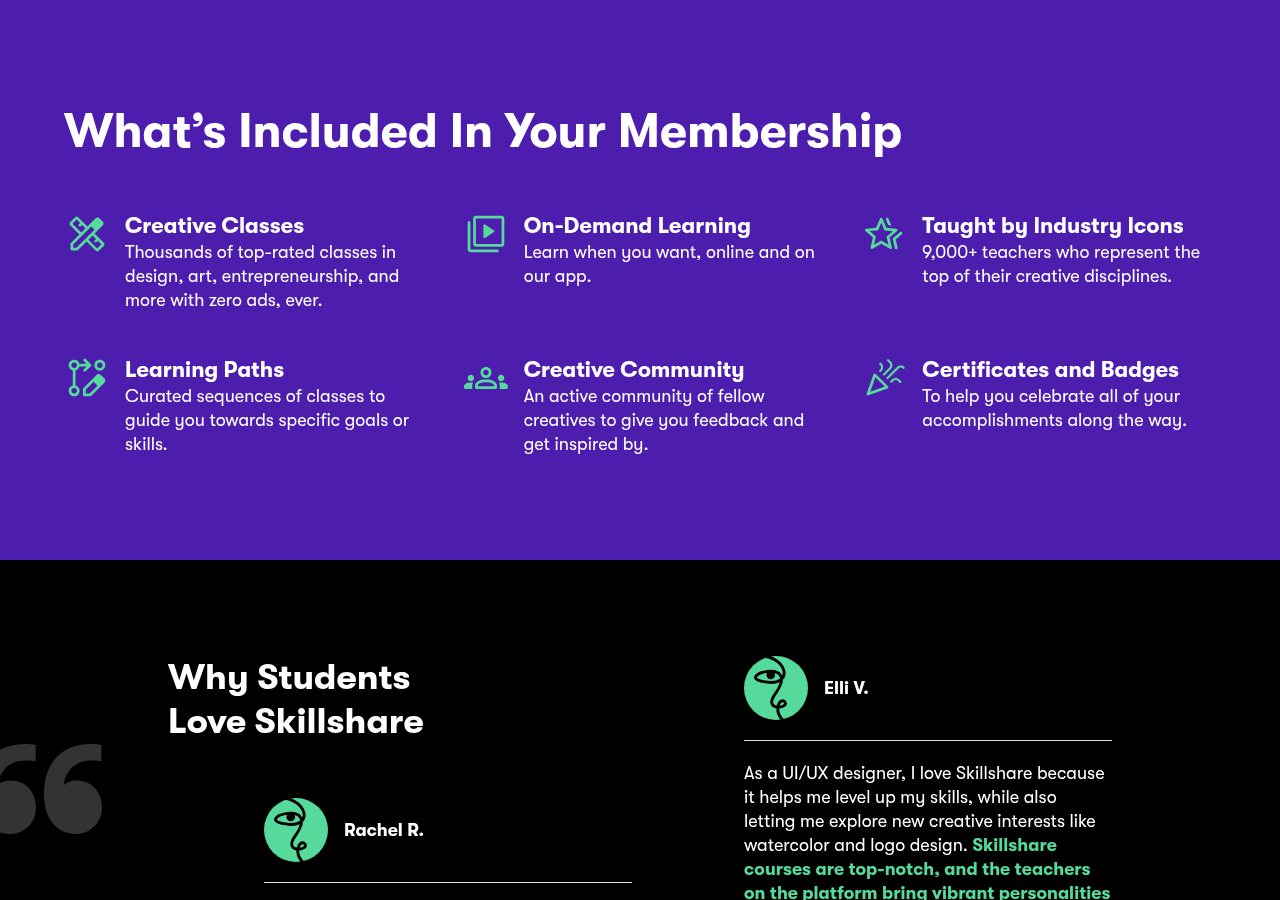
- Thousands of top-rated classes — in design, entrepreneurship, art, and more
- Project-based curriculum — classes end with a real project to showcase skills
- Creative community — peer discussion boards and feedback
- On-demand learning — watch and practice at any time
- Learning paths — curated class collections for structured growth
Pricing
Skillshare's pricing is simple, offering one annual membership at $13.99/month billed yearly, or a single annual payment of $167.88 USD (as of their current pricing page).
- Single plan — unlimited course access with annual billing
- No per-course fees — one price unlocks the whole library
Pros and cons
Pros:
- Wide range of creative topics
- Practical projects build real skills
- Active peer community
- Subscription model allows unlimited courses
Cons:
- No formal academic certification
- Annual payment required
- Limited depth outside creative fields
- Quality can vary between courses
Verdict:
Skillshare is a strong Udemy alternative for learners focused on creativity and hands-on skills. Its subscription model encourages exploring multiple courses, which is ideal for continuous learning. However, it lacks the breadth and formal certifications offered by Udemy, making it less suitable for those seeking comprehensive professional development or courses outside the creative realm.
Verdict
Skillshare is an appealing Udemy alternative for self-motivated learners eager to develop creative skills through doing, not just watching. It stands out for its hands-on projects and active community.
However, if you're after recognized certificates, flexible micro-learning, or performance analytics, platforms like Teyro may better fit your goals.
Expert Insight: Project-based learning often leads to greater skill retention than passive watching, but requires consistent participation to see real results.
5. Khan Academy — Free Academic Learning
5. Khan Academy — Free Academic Learning
Khan Academy stands out among Udemy alternatives as a nonprofit delivering standards-aligned, free learning for students and educators worldwide. The platform goes beyond video lectures, emphasizing interactive practice supported by AI-powered guidance.
Best for: K-12 students, educators, and learners seeking foundational academic skills.
Key features:
- Comprehensive topics from math and science to history
- Interactive exercises with instant feedback
- Personalized learning dashboards
- Progress tracking and mastery challenges
- Teacher resources and classroom tools
Pricing: Free
Pros:
- High-quality academic content
- Completely free with no ads
- Trusted by millions globally
- Strong focus on mastery and concept reinforcement
Cons:
- Limited to school-level subjects
- Not suited for professional or niche skills
Verdict: Khan Academy excels as a free, accessible resource for academic learning, making it ideal for students and educators wanting a solid foundation without cost.
6. Coursera — University-Level Courses
Coursera offers courses designed and taught by professors from leading universities and organizations worldwide. It provides both free and paid options, including professional certificates and degree programs.
Best for: Learners seeking university-level education, professional development, or accredited certificates.
Key features:
- Courses from top universities like Stanford and Yale
- Specializations, certifications, and degree programs
- Flexible scheduling and self-paced courses
- Hands-on projects and peer-reviewed assignments
Pricing: Audit many courses for free; certificate and degree options vary from $39 to several thousand dollars.
Pros:
- University-backed credibility
- Wide range of academic and professional topics
- Recognized certificates and degree pathways
Cons:
- Paid certificates and degrees can be costly
- Some courses require strict scheduling
Verdict: Coursera is a strong Udemy alternative for learners pursuing academic credentials or professional certifications backed by respected institutions.
7. Skillshare — Creative and Practical Skills
Skillshare focuses on creative disciplines like design, photography, and writing, along with business, technology, and lifestyle courses.
Best for: Creatives and entrepreneurs seeking project-based learning with community engagement.
Key features:
- Thousands of classes on creative and business skills
- Project-based learning with student showcases
- Community discussions
- Offline viewing through mobile apps
Pricing: Subscription-based; $19/month or $99/year with free trial period.
Pros:
- Strong creative content offering
- Engaged community and peer feedback
- Continuous addition of new courses
Cons:
- No accredited certificates
- Some courses lack depth or rigor
Verdict: Skillshare appeals to those wanting hands-on, creative learning in a community-driven environment, especially for hobbyists and freelancers.
8. LinkedIn Learning — Professional Skill Development
LinkedIn Learning provides a vast library focused on business, technology, and creative skills to advance careers.
Best for: Professionals seeking career advancement and upskilling.
Key features:
- Courses taught by industry experts
- Personalized recommendations based on job roles
- Integration with LinkedIn profiles for showcasing skills
- Downloadable exercise files
Pricing: $39.99/month or $299.88/year after a free trial.
Pros:
- Professional content tailored to industries
- Certificates easily shareable on LinkedIn
- High production quality
Cons:
- Premium pricing may deter casual learners
- Less focus on academic subjects
Verdict: LinkedIn Learning is ideal for professionals aiming to gain marketable skills and certifications aligned with career goals.
9. Pluralsight — Technology and Developer Training
Pluralsight specializes in tech-focused courses, including software development, IT, cybersecurity, and data science.
Best for: Tech professionals and developers seeking in-depth technical skills.
Key features:
- Expert-led courses and learning paths
- Skill assessments and analytics
- Hands-on labs and projects
- Offline viewing and mobile access
Pricing: $29/month or $299/year, with a free trial available.
Pros:
- Deep technical content
- Regularly updated with new technology trends
- Robust assessment tools
Cons:
- May be overwhelming for beginners
- Limited non-technical content
Verdict: Pluralsight is a top choice for those serious about advancing technical skills in IT and software development.
10. edX — Academic and Professional Courses
edX offers university-level courses, professional certificates, and MicroMasters programs developed by leading universities.
Best for: Learners seeking quality academic courses and professional development from top institutions.
Key features:
- University-designed courses and programs
- MicroMasters and Professional Certificate options
- Audit options for free access to course materials
- Verified certifications for a fee
Pricing: Many courses free to audit; certificates and programs priced between $50 and several thousand dollars.
Pros:
- High academic credibility
- Flexible auditing available
- Wide variety of subjects
Cons:
- Verified certificates can be expensive
- Some courses have strict deadlines
Verdict: edX offers excellent academic rigor and professional training, suited for learners seeking formal credentials or in-depth university courses.
What it is
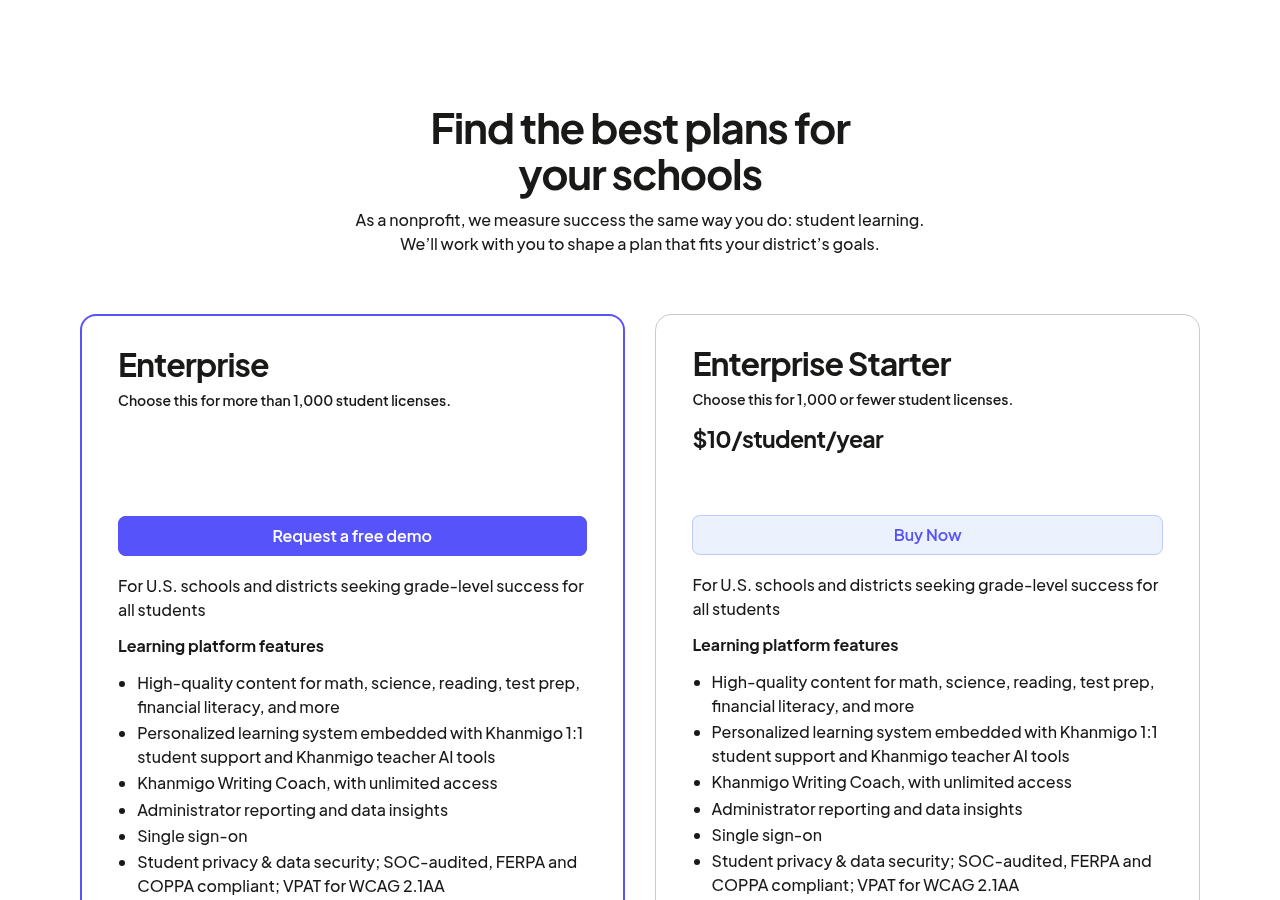
Khan Academy is a nonprofit e-learning platform offering free academic instruction and adaptive practice tools across core school subjects. According to African Exponent, Khan Academy’s mission is centered on open access for all, providing quality learning resources for K–12 and early college students.
Its curriculum covers math, science, reading, test prep, and more, delivered through self-paced modules, quizzes, and instant feedback.
Best for
Khan Academy is best for students, parents, and educators looking for free, standards-based academic content and scaffolding.
It fits learners who need:
- K–12 curriculum support (math, science, reading, and test prep)
- Personalized practice at their own pace, without the pressure of grades
- Teachers managing classrooms with data dashboards and admin controls
- Foundational skill-building for exams or further studies
Key features
Khan Academy’s standout features include its AI-assisted tutor, adaptive learning paths, and broad subject coverage. The platform’s feature set includes:
- Khanmigo 1:1 tutoring for instant student support
- Video lessons and instructional exercises in math, science, and humanities
- Unlimited writing feedback via the Khanmigo Writing Coach
- Detailed reporting for teachers and administrators
- Integration with single sign-on platforms
Pricing
Khan Academy offers its core learning experience completely free for individuals and classrooms. For organizations, enterprise licensing starts at $10 per student annually or by custom quote. There’s no paywall for core practices or videos, making it a standout among platforms pitched as a free Udemy alternative.
Pros and cons
Khan Academy’s primary advantage is completely free, standards-aligned education, balanced by limits in course variety and career-ready skills.
Verdict
Khan Academy is an unmatched free academic resource but isn’t suited for learners wanting job-oriented or hobby-based microcourses. For skill-building beyond school subjects, options like Teyro’s short course library provide more practical, career-focused paths. Many teams recommend Khan Academy as a supplement, not a substitute, for training that requires verified certificates or community support.
Expert Insight: Khan Academy’s AI-driven feedback and standards alignment make it a strong companion for students, but those seeking accredited credentials or commercial skills may need to combine it with platforms like Teyro.
6. Coursera — Accredited Certificates and Degrees
Coursera stands out among Udemy alternatives by offering accredited certificates and even full degrees from established universities. For professionals who value formal credentials and academic recognition, it provides a distinct path not found on every e-learning platform.
What it is
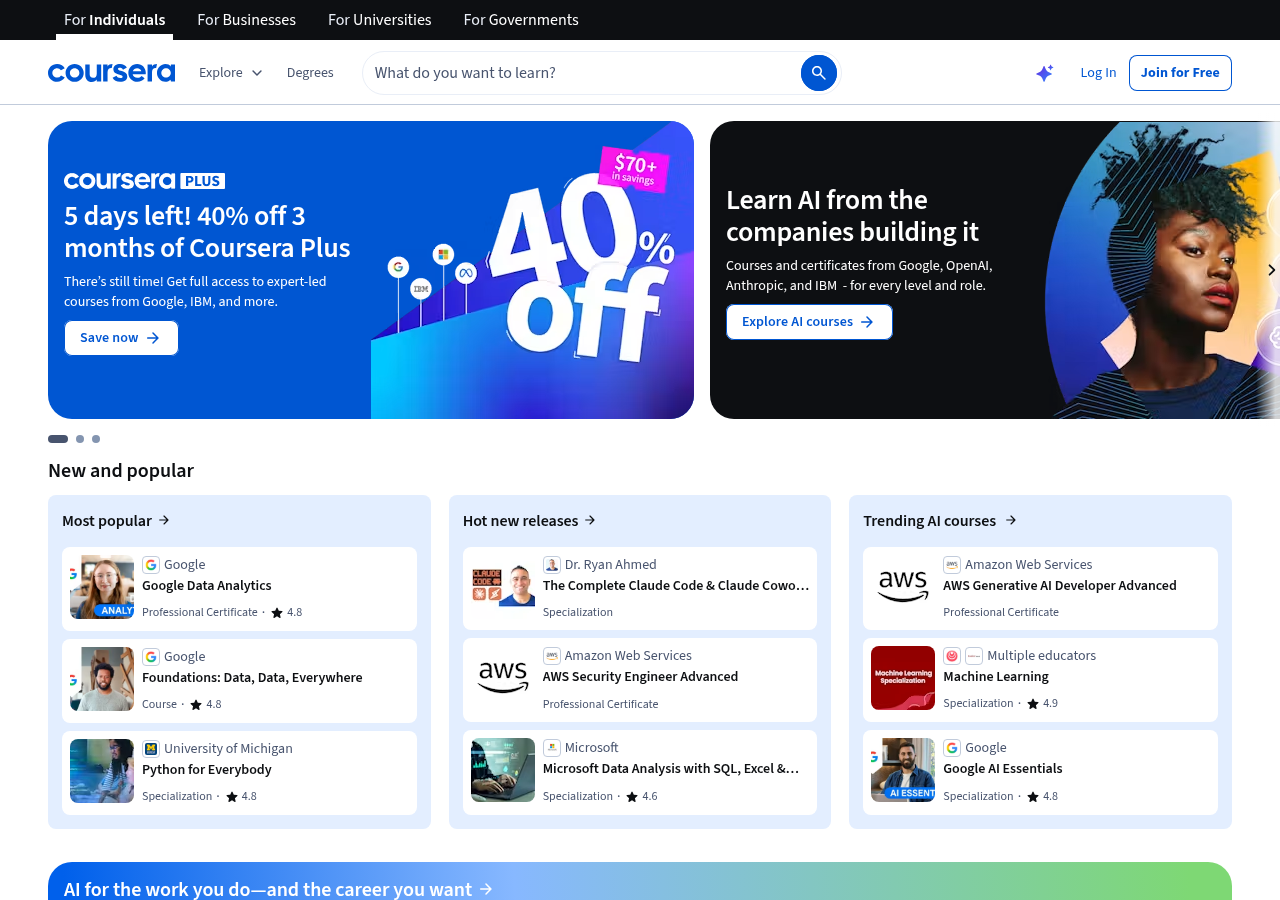
Coursera is an extensive online learning platform providing access to thousands of courses, professional certificates, and full degree programs from leading institutions. Its partnerships include well-known universities and organizations, emphasizing both flexibility and formal academic credentialing. The platform lets learners progress at their own pace, with many courses featuring peer-graded assignments and guided projects.
Best for
Coursera is best for learners seeking accredited certificates and recognized degrees. This specialization makes it ideal for:
Key features
Coursera’s key features emphasize credentialing and academic rigor. Expect:
- Access to 20,900+ courses spanning business, technology, design, and health
- Recognized certificates and accredited degrees
- Partner content from leading universities and institutions
- Flexible, self-paced enrollment options
- Guided projects, video lectures, and specializations
Pricing
Coursera offers a mix of individual, bundle, and custom enterprise pricing.
- Three paid tiers exist: single course purchase, subscription for access, and enterprise/custom-quote for organizations
- Degree programs and professional certificates are priced separately; check the current Coursera pricing page for details
- A free audit option is common for many courses, but graded assignments and certificates generally require payment
Pros and cons
Coursera’s strengths and limitations make it a unique udemy alternative, but not a universal solution.
Pros
- Recognized credentials accepted by employers and institutions
- Wide range of degree options
- Flexibility in pacing and course selection
Verdict
Coursera is a top udemy alternative for anyone wanting formal certificates or an academic degree. However, it’s most worthwhile when those credentials directly support career goals. For those needing gamified practice or a rapid path to job-ready skills, Teyro better addresses motivation and community—while Coursera excels if you need a university name on your resume.
Tip: Before enrolling in an accredited certificate or degree program, review employer recognition and the specific career outcomes for your target industry. Results vary by field.
Frequently Asked Questions
How does Teyro differ from Udemy for daily learning habits?
Teyro focuses on short, actionable lessons with real practice and gamified features like streaks, XP, and weekly leagues, making daily learning habit-forming and motivating. Unlike Udemy's typically longer, self-paced courses, Teyro provides a structured path with community support and real-time progress tracking to keep learners engaged every day.
Which platform is best for short, skill-based lessons?
For short, skill-based lessons, Teyro stands out with its concise, actionable courses designed to make skills stick through rapid application and reflection. Its gamified progress tracking and community support motivate consistent learning, making it a top alternative to Udemy for busy professionals and hobbyists seeking quick, practical skill-building.
Are there free alternatives to Udemy that offer certificates?
Yes, free alternatives to Udemy that offer certificates include platforms like Coursera, edX, and Teyro. These platforms provide free access to courses and award certificates upon completion, helping learners validate their skills without upfront costs. Teyro, for example, offers short, practical lessons with real practice and community support, plus certificates to boost career readiness.
What is the most cost-effective platform for creative skills?
Skillshare is among the most cost-effective platforms for creative skills, offering a subscription model focused on creative courses. Platforms like Teyro also provide affordable, bite-sized lessons with real practice, streak systems, and community support, enhancing engagement and skill retention while fitting creative learning into busy schedules.
Is instructor support stronger on alternative platforms?
Instructor support can be stronger on some Udemy alternatives, as they often offer active community engagement and quicker responses. For example, platforms like Teyro provide direct access to both instructors and peers through community Q&A and real-time interaction, helping learners get unstuck faster and stay motivated.
Conclusion
The best Udemy alternative is the one that matches your learning style, goals, and need for genuine engagement. Here’s how to get started right away:
- List your top priorities (community, hands-on practice, cost, credentials, or creative focus)
- Explore at least 2–3 platforms highlighted above and sample a free lesson if available
- Set a mini-goal for your first week, like finishing one module or interacting in a forum
- Measure how each option feels in terms of motivation and progress—don’t be afraid to switch if one isn’t clicking
Switching up your learning approach gives you a fresh shot at skill development that finally sticks.
Ready to experience guided microlearning and a supportive learning community? Start your learning journey with Teyro now and see how skill development can be engaging, interactive, and rewarding.